Events and venues
Big nights. Smaller energy bills.
Lighting, HVAC, bar fridges and cellar cooling run whether the house is full or the doors are locked. We cut that waste with voltage optimisation, KBR Refrigeration and CleanFlo, then prove every kWh in Pulse.










Doors open for a few hours. Your appliances run for all 24.
Even a busy venue only has a crowd in for a slice of the day. Lighting, HVAC, bar fridges, cellar cooling and beer coolers keep drawing power before doors, after close and on every dark day in the diary.
Then the pressure flips. Thousands of pints in a short interval, through lines that have sat still since the last show. That is where fobbing, slow serves and wasted beer come from.
Lost by UK pubs and bars each year to beer quality problems, around 5.8% of on trade beer sales.
Pints in the UK poured through a line that is overdue a clean.
Of UK grassroots music venues made no profit in 2025. Every pound of overhead counts.
Sources: Cask Marque beer quality research, Music Venue Trust Annual Report 2025.
One install. The whole venue uses less.
UK mains often arrives well above the voltage your equipment is built for, and a stadium or arena pays for every extra volt across thousands of lights, motors and chillers. Voltage optimisation brings the whole site down to the level your kit runs best at. Nothing changes for the crowd, the bill just gets smaller.
- Floodlights, concourse and house lighting
- HVAC, air handling and extraction
- Escalators, lifts and pumps
- Kitchens, bars and cooling
Cooling that knows when the bar is open.
Refrigeration is usually the largest single electrical load behind a bar, and most of it runs flat out around the clock. KBR matches cooling to real demand and your event calendar, asset by asset, without letting temperatures drift.
Same temperatures
Thermocover probes read like the product, not the air, so compliance holds.
Follows your calendar
Cooling ramps down on dark days and is back to temperature before doors.
Fast payback
Typical return in 12 to 18 months, fitted with no downtime.
Proven in Pulse
Energy and temperature side by side for auditors and brand owners.
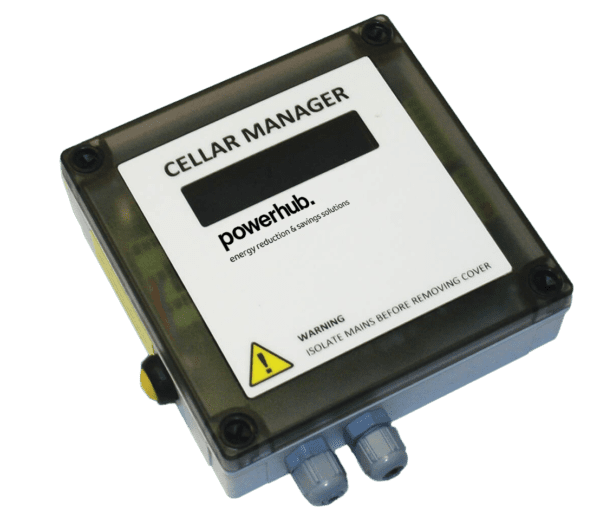
Cellar Manager
Uses the thermal mass of your kegs to cool only when the cellar needs it, not on a fixed cycle all week.
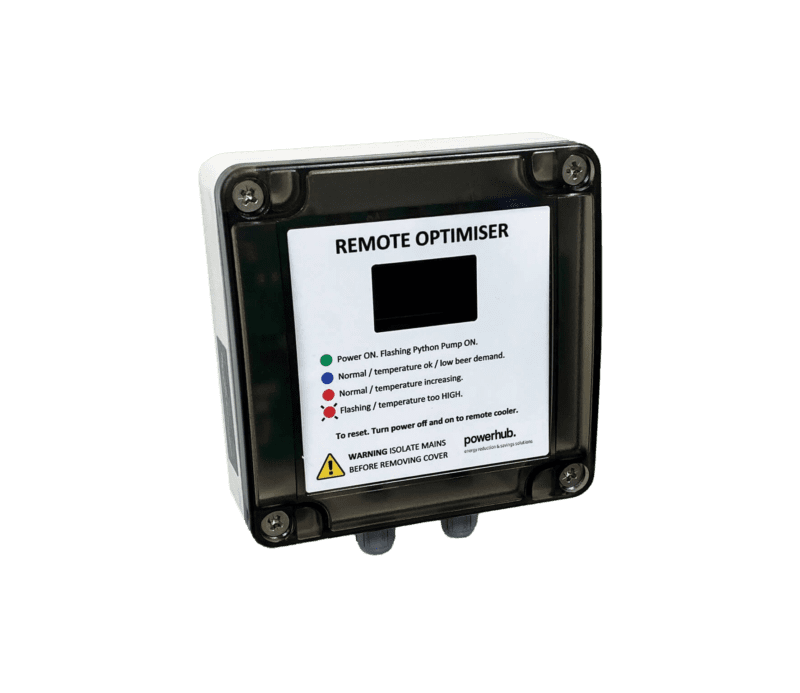
Remote Optimiser
Links remote beer coolers to actual dispense. Ideal for long line runs to concourse bars.
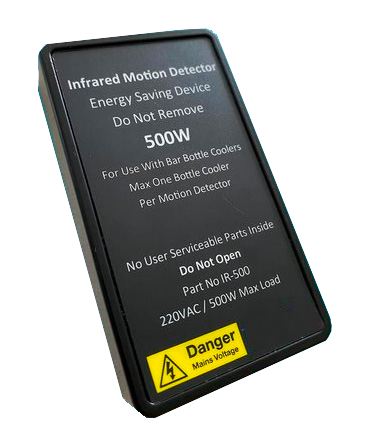
Bottle Fridge Manager
Powers bar fridges down when a bar is quiet and back up before service.
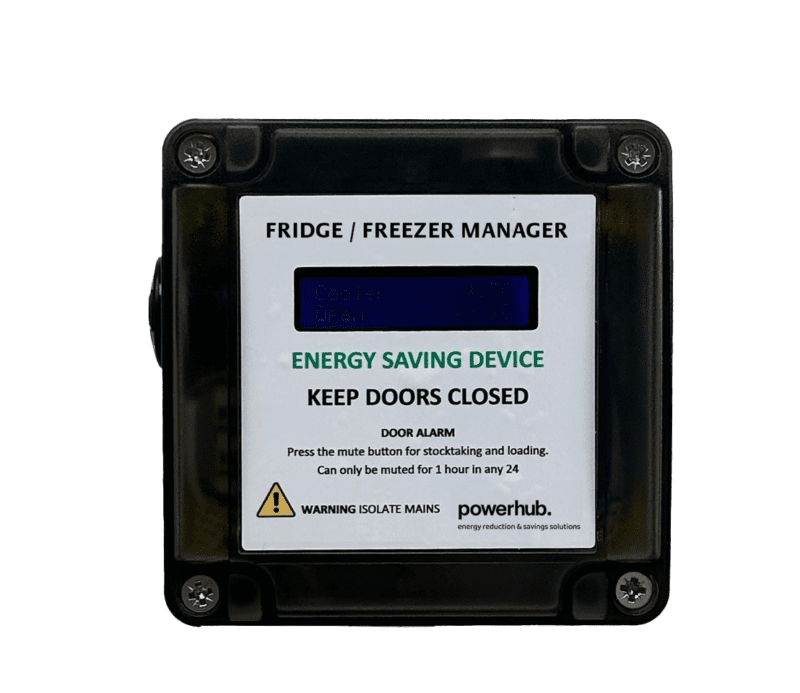
Walk In Fridge and Freezer Manager
Smarter compressor control for catering cold rooms, with door alarms.
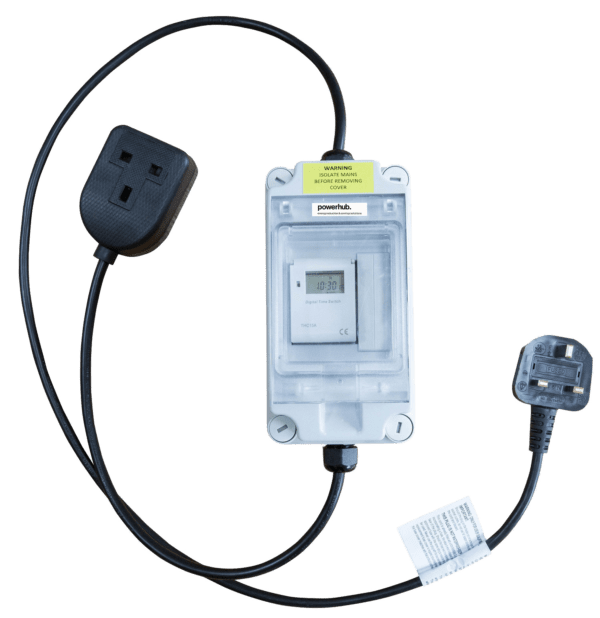
Post Mix Timer
Switches post mix chillers off when the venue is closed and on before trading.
No more fobbing at half time.
Bacteria in beer lines and fob detectors cause fobbing and spoil the taste, so standard lines need a full clean every 7 to 10 days. CleanFlo stops it at the source and your lines can go up to six weeks between cleans. Across dozens of lines in every bar, that is a lot of beer, labour and chemical you stop pouring away.
Ask about CleanFloAntimicrobial drop line
Made from an antimicrobial polymer, so bacteria cannot colonise the inside of the pipe.
TF Module fob detector
Vortex blades remove the still zones where bacteria breed. Beer lost per clean drops from a quarter pint to a tenth.
Yeast sediment trap
Catches free yeast before it reaches the tap. Zero fobbing was recorded in trade trials.
Independent trade trials with Greene King, tested by the University of Nottingham.
How much beer goes down the drain?
Every line clean flushes beer out of the line before the cleaning fluid goes in. Put in your own numbers and see what moving to six weekly cleans could keep in the glass.
Compares your current cleans with one every six weeks (about 9 a year). Labour, chemical and water savings come on top. A guide only, we confirm the real figures on site.
From small rooms to 60,000 seat stadiums.
Each venue type wastes energy in its own way. We look at yours first and fit what pays back fastest.

Arenas and stadiums
Floodlights, dozens of bars, long beer line runs and big kitchens that sit idle between fixtures.

Music venues and bars
Tight margins, late nights and cellars that keep cooling on every dark day in the diary.

Theatres
Stage lighting, HVAC for a full house and interval bars that run flat out for twenty minutes.

Cinemas
Projection, HVAC across every screen and concession fridges that never switch off.

Ice rinks and leisure
Ice plant and refrigeration are the biggest loads of all, so every volt counts.
Every bar and cellar on one screen.
This is Pulse. It shows what each venue, stand or bar used, what it saved and when a cellar or fridge starts to drift. Your ops team can read it on show day without calling an engineer.
+18% vs last event
In range
No event today
Survey. Fit. Prove.
Survey
We walk your bars, cellars and plant rooms and look at your half hourly data. You get a costed plan with the payback in writing.
Fit
Our engineers install around your event calendar, so no show, fixture or screening is ever affected.
Prove
Every kWh and every cellar temperature tracked in Pulse and checked against the baseline you signed.
See what your venue could save.
Send us half hourly data or three months of bills for one venue. Our analysts come back with a guaranteed savings proposal by the end of the working day. No consultant fees and no obligation.

Energy saving for venues, answered.
Still weighing it up? Get a free audit for one venue by the end of the working day.
Why is voltage optimisation such a good fit for venues?
Stadiums, arenas and theatres run huge amounts of lighting, HVAC, motors and cooling, and UK mains often arrives at a higher voltage than that equipment needs. Voltage optimisation fits once at the incoming supply and brings the whole venue down to the right level, cutting electricity use by up to 15% with no change for your crowd or your shows. Lights and motors also run cooler, so they last longer.
How much energy can a venue save?
It depends on your supply voltage, how often you trade and how much refrigeration runs behind your bars. Voltage optimisation typically cuts site electricity by up to 15%, KBR usually pays back in 12 to 18 months and the Cellar Manager alone cuts primary cellar cooling by around 30%. We work out your own figure from half hourly data before we quote.
Will KBR affect beer or food temperatures?
No. KBR uses Thermocover probes that read like the product rather than the air, so the controller manages to the temperature that matters. Cellar and fridge temperatures are logged in Pulse, so you have records for EHOs, brand audits and your own quality checks.
What is CleanFlo and how does it stop fobbing?
CleanFlo is KBR's new beer line management system. It combines antimicrobial drop lines, TF Module fob detectors and a yeast sediment trap. Together they stop bacteria building up in the lines, which is what causes fobbing and off flavours. In trade trials with Greene King, tested by the University of Nottingham, bacteria fell by 99.98% and zero fobbing was recorded.
How often do beer lines need cleaning with CleanFlo?
Up to six weeks between cleans, compared with every 7 to 10 days on standard lines. For a venue with dozens of lines that means far less beer flushed away, less chemical and up to 80% less engineer time.
Can you install without affecting events?
Yes. We plan every install around your event calendar and fit on dark days or before doors. KBR units and CleanFlo parts go in without shutting bars, and voltage optimisation needs only a short planned isolation that we schedule with your facilities team.
Do you work with venue groups and multi site operators?
Yes. Every site reports into one Pulse account, so you can compare energy, cellar temperatures and savings across your whole estate. Many groups start with one venue, see the verified results and then roll out.