
If your electricity bill has doubled since 2021 and your gas costs remain stubbornly high, you are not alone. UK business energy prices peaked at around 45–50p per kWh for many non-domestic users in late 2022, and while they have fallen, most commercial sites are still paying north of 20p per kWh for electricity and over 7p per kWh for gas as of early 2026. Against this backdrop—and with the UK’s legally binding net zero target for 2050—saving energy is no longer optional. It is one of the most direct ways to save money, reduce your carbon footprint, and build a more resilient operation.
This guide is for UK business owners, facilities managers, and anyone responsible for managing commercial energy costs.
Saving energy means reducing the amount of electricity and gas your business uses. This not only cuts costs but also helps reduce hazardous greenhouse gas emissions.
At Powerhub Solutions, we have surveyed, metered, and optimised energy use across more than 3,000 UK commercial sites spanning hospitality, retail, gyms, food manufacturing, and leisure. The patterns repeat: businesses routinely waste 10–20% of their energy consumption through excess voltage, poorly controlled refrigeration, mis-set heating, and equipment left running when nobody is there. This handy guide draws on that real-world data to set out practical, measurable energy saving tips for commercial operators.
What you will learn:
- Where your energy actually goes and how much energy typical sites consume
- How voltage optimisation, refrigeration controls, and smart meters deliver measurable savings
- Practical heating, insulation, lighting, and solar panels guidance with real costs and payback
- Behavioural changes, tariff strategies, and a 90-day action checklist to start saving money today
How much energy do typical UK businesses use – and where does it go?
Understanding how much energy your site consumes-and which systems draw the most power-is the essential first step. According to the Carbon Trust, heating and hot water account for over half your energy bill in many commercial buildings, while refrigeration takes 30–60% of electricity in hospitality and food service. Lighting contributes 10–25%, catering equipment 10–20%, and miscellaneous small power around 5–15%.
To make this concrete: a medium-sized pub using 200,000 kWh of electricity per year at 25p per kWh faces an annual electricity bill of £50,000. A 10% reduction-entirely achievable through the measures below-saves £5,000 and roughly 35 tonnes of CO₂. A chilled distribution warehouse consuming over 1 GWh annually has proportionally far more at stake. Because electricity unit rates are typically three to four times higher than gas per kilowatt hour, electricity savings deliver disproportionate financial impact even when gas volumes are larger.
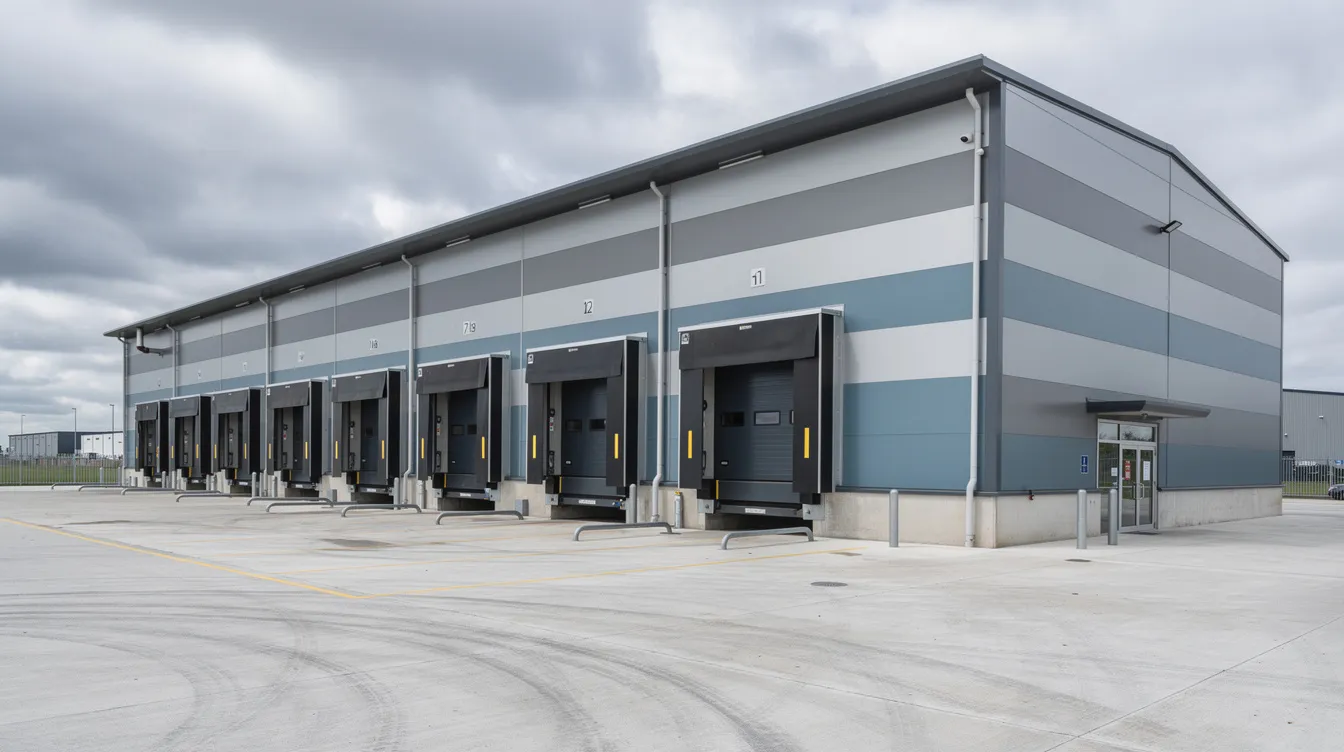
Voltage optimisation: reducing wasted electrical energy at the mains
The UK grid nominally supplies 230V, but in practice the average voltage arriving at most commercial sites is around 242V-sometimes reaching 253V. That persistent over-voltage forces lighting, motors, fans, and refrigeration compressors to draw more energy than they need, generating excess heat and accelerating equipment wear.
Voltage optimisation addresses this by installing a transformer or regulator at the mains intake to reduce and stabilise the incoming supply to around 220–225V. Across our 3,000-plus UK sites, verified electricity savings typically fall in the 5–15% range on compatible loads. As a worked example, consider a multi-site gym chain consuming 1,200,000 kWh per year: a 10% saving of 120,000 kWh at 20p per kWh equals £24,000 in annual savings and roughly 21 tonnes of CO₂ avoided. Installation costs for medium commercial sites generally sit between £25,000 and £60,000, giving a payback period of two to four years at current tariffs.
Voltage optimisation works best where supply voltage is consistently high and the site has substantial lighting, motor, or HVAC fan loads running for long hours. It adds limited value on sites dominated by electronic equipment with built-in switch-mode power supplies, which regulate their own input.
Refrigeration and cold rooms: a major opportunity in hospitality and food
Refrigeration accounts for 30–60% of total electricity consumption in many hospitality and food service sites-walk-in cold rooms, display cabinets, cellar coolers, ice machines, and drinks fridges running around the clock. A single poorly sealed fridge freezer door or a malfunctioning defrost cycle can add thousands of kilowatt hours to annual energy usage without anyone noticing.
Refrigeration energy management systems such as KBR-type controls optimise defrost cycles, tighten temperature setpoints and deadbands, sequence compressors, and trigger alarms for open doors. Real-world results from pub and restaurant groups show 15–25% savings on refrigeration load. For a site where refrigeration uses 350,000 kWh annually, a 20% saving delivers 70,000 kWh and roughly £14,000 per year at 20p per kWh, with payback typically in 18–30 months.
Quick refrigeration wins for site managers:
- Fit night blinds on open display cases
- Keep cold room doors closed; check seals monthly
- Defrost evaporators on schedule
- Set fridges to 3–5°C and freezers to −18°C to −21°C
- Clean condenser coils quarterly
Heating and boiler optimisation: saving gas without sacrificing comfort
Heating and hot water typically represent more than half of a UK commercial site’s gas consumption. Most heating systems in older buildings run boilers at a flow temperature of 70–80°C-far higher than needed for much of the year. Reducing boiler flow temperature to 60°C allows condensing gas boilers to operate in their efficient condensing mode, where return water is cool enough for the exhaust vapour to condense and recover latent heat. This single adjustment can cut gas bills by £65 per year in a small site and proportionally more in larger buildings, with field studies suggesting 5–10% gas savings overall.
Most modern combi boilers and modern combi boilers with system configurations support this adjustment, but it should be carried out by a Gas Safe–registered engineer. Servicing your boiler regularly is equally important for maintaining efficiency and safety. Turning your thermostat down by just one degree can save about £90 annually, and using a programmable thermostat can reduce your heating bill by roughly 10–12%. Thermostatic radiator valves allow you to control heat room by room; turning off radiators in empty rooms or unused rooms can save around £40 a year. Where electric heating is used-common in some retail units and extensions-the same scheduling discipline applies.
For buildings with a heat pump, the Boiler Upgrade Scheme supports installations and can offset a significant share of the upfront cost.
Smart meters and sub-metering: knowing how much energy you use in real time
A smart meter provides real-time energy usage data and eliminates estimated bills by sending automatic half-hourly readings to your energy supplier. This alone removes the guesswork, but the real value comes from analysing the load profile it reveals. Energy monitors can show exact energy consumption of devices when paired with sub-metering at circuit level, and tracking energy use this way helps identify high consumption appliances or systems running when they shouldn’t be.
On one gym site, sub-metering revealed a 20 kW overnight baseload that should have been closer to 8 kW-a hot water circulation pump was running 24 hours a day instead of on a timed schedule. Fixing that single issue saved over 100,000 kWh annually. Regular meter readings, even weekly checks of your smart meter dashboard, can help monitor energy usage effectively and catch anomalies before they become expensive.
Data to check weekly: overnight baseload, peak half-hour demand, any unexpected out-of-hours consumption spikes, and comparison to the same week last year.
IoT energy management systems (EMS/BMS) for multi-site control
An energy management system (EMS) or building management system (BMS) automates and optimises heating, ventilation, air conditioning, and lighting across one or many sites. Modern IoT-based platforms connect sensors, meters, and plant controls to a cloud dashboard, enabling centralised monitoring, scheduling, and alerting.
Consider a restaurant chain deploying an EMS to standardise thermostat setpoints, schedule HVAC start and stop times, and flag equipment faults across 50 locations. Savings of 10–20% on electricity are realistic-the Radisson Blu East Midlands achieved a 30% overall energy reduction through optimising its existing BMS and HVAC controls, with ROI under 12 months. Typical installation costs run £3,000–£10,000 per site depending on complexity, with payback of one to three years.
Lighting: upgrading to LEDs and smarter controls
Lighting can account for 15–30% of total electricity in retail, gyms, and offices. LED light bulbs use about half the energy of fluorescent bulbs and far less than halogen, with lifetimes several times longer. Switching to LED bulbs can save around $200 per year per fixture cluster in electricity costs, and across a portfolio of sites the savings compound rapidly.
As a numerical example: replacing 200 × 58W fluorescent battens in a supermarket operating 4,000 hours per year with 24W LED alternatives saves roughly 27,000 kWh annually-around £5,400 at 20p per kWh. Add occupancy sensors in back-of-house corridors, daylight sensors near windows, and time scheduling for external signage, and you reduce electricity consumption further.
Solar panels and battery storage: generating more energy on-site
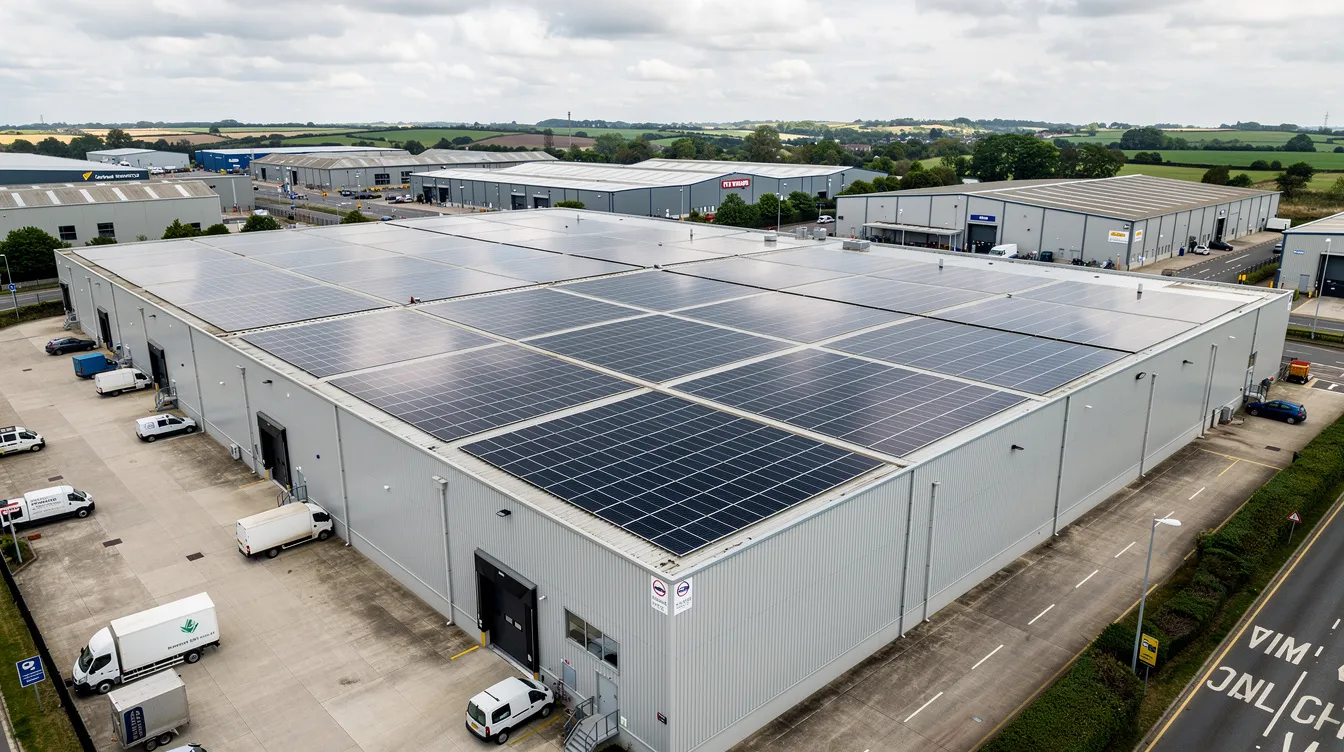
Rooftop solar panels convert the sun’s energy into electricity that directly offsets imported grid power during daylight hours, with no fuel cost after installation. A typical UK commercial rooftop system yields 800–1,000 kWh per kWp per year, so a 100 kWp installation might generate around 90,000 kWh annually.
For a leisure centre paying 22p per kWh, self-consuming that output saves roughly £19,800 per year, giving a simple payback of four to seven years at 2025–26 capital costs. Cold storage warehouses with constant refrigeration loads achieve even faster paybacks of 2.5–3.5 years because self-consumption rates reach 75–90%.
Battery storage extends the value of solar by storing excess daytime generation for evening peaks-particularly useful for restaurants and gyms that are busiest after dark. Batteries also enable demand-shifting onto cheaper tariff periods. Practical considerations include roof orientation, structural surveys, planning permission, and grid connection capacity, all of which should be assessed before committing.
Insulation and building fabric: lofts, cavity walls and more
Heat loss through roofs, walls, floors, and glazing directly increases your heating demand. Proper insulation can reduce energy usage for climate control by approximately 30%, and it is a long-term asset with a lifespan of 20 years or more.
Cavity wall insulation is one of the most cost-effective measures for suitable UK buildings. The Energy Saving Trust estimates savings of about £240 a year on energy bills for a typical gas-heated semi-detached property, with similar proportional benefits for small commercial units. Loft insulation to the recommended 270mm depth addresses another common weak spot-uninsulated loft hatches and plant room ceilings are frequently overlooked. Wall insulation for solid-walled buildings (internal or external) is more complex and costly but can still be justified where heat loss is severe.
Sealing drafts around doors and windows is one of the cheapest ways to stop heat escaping. Draught-proofing alone can save around £85 on energy bills annually. In commercial settings, loading bay doors in warehouses and frequently opened front doors in pubs are common culprits, and simple brush strips, automatic closers, or air curtains can reduce heat loss substantially and help keep the building warm.
Note: the Great British Insulation Scheme closed on 31 March 2026, but other support mechanisms remain-see the financing section below.
Hot water systems and cylinders: reducing standing losses
Many hotels, leisure centres, and older offices use a separate hot water cylinder rather than a combi boiler. Uninsulated or poorly insulated cylinders and distribution pipework cause continuous heat loss, quietly increasing gas or electricity consumption. Installing a hot water cylinder jacket can reduce heat loss by up to 75% and save up to £40 a year even in a domestic context-commercial savings scale accordingly with larger cylinders and higher usage.
Stored hot water must be maintained at 60°C to prevent legionella growth, as required by HSE guidance, but distribution pipework should be lagged and unnecessary circulation pumps checked for 24/7 running. The energy used to heat water for just one bath is roughly equivalent to several showers, so demand management matters too.
Managing shower time, pool halls and leisure water heating
In gyms, swimming pools, and leisure centres, shower water and pool heating are major gas or electricity loads. Shortening showers can save on both water and heating energy-even reducing average shower time by one minute across 300 daily showers makes a measurable difference. Low-flow shower heads, push-button or timed controls, and setpoint optimisation all help save water and energy simultaneously.
For pools, using covers when the pool is not in use, controlling air temperature and humidity carefully, and recovering heat from exhaust air are the primary levers.
Optimising catering equipment and kitchen energy use
Catering equipment in hotels, restaurants, and pubs can consume large amounts of gas and electricity during relatively short daily windows. Simple discipline makes a difference: turn combi ovens and grills on only when needed, use lids on pans, and match pot size to hob ring. Boiling only the water you need-whether in a kettle or a pan-can save up to 83 kW of electricity yearly per appliance.
Using full loads in dishwashers and laundry machines maximises both energy and water use; optimising dishwasher use alone can yield noticeable savings. For low-volume periods, smaller appliances such as counter-top ovens and air fryers avoid running full-size equipment at partial load. Using eco mode on appliances can save up to 40% energy compared to standard cycles. Replacing old electrical appliances with energy efficient models can save up to £490 a year, and the long-term cost savings typically outweigh the higher upfront price of using energy-efficient appliances.
Office and IT equipment: controlling plug loads and standby
Office plug loads-PCs, monitors, printers, vending machines, point-of-sale terminals-add up across hundreds of locations. A computer and monitor left on 24/7 can cost over £50 per year in electricity; switching off out of hours reduces that to around £15. Setting appliances to standby mode when not in use is better than leaving them fully powered, though eliminating standby draw entirely through shutdown policies or smart plugs yields more savings at scale.
Auto-sleep settings, aggressive power management on monitors, and IT-enforced shutdown schedules are straightforward to implement and require no capital spend.
Compressed air, motors and fans: industrial energy hotspots
In light industrial and manufacturing sites, compressed air systems, pumps, and fans can represent 20–40% of electricity consumption. Reducing compressed air system pressure by 10% can cut energy use by around 5%. Multiple small leaks in a compressed air network can waste hundreds of pounds per year in electricity without anyone hearing them.
Variable speed drives on motors driving fans and pumps match speed to actual demand, reducing energy use by 20–50% in applications where loads vary throughout the day. Regular maintenance-filter cleaning, belt tension checks, and recording motor running hours-helps target oversized or under-loaded machines that consume more energy than necessary.
Energy data, KPIs and benchmarking across multiple sites
Larger organisations track energy performance using intensity metrics: kWh per m², kWh per bednight, kWh per workout, or kWh per 1,000 transactions. Weather-normalising the data prevents misinterpreting cold winters or mild summers as genuine efficiency changes.
Benchmarking 100 pubs and identifying the top and bottom quartile, for instance, reveals where to focus site audits first. Visual dashboards with traffic-light indicators help non-technical managers act on the data. The principle is continuous improvement: track, act, review, repeat.
Behavioural change and staff engagement
The Carbon Trust estimates that staff engagement programmes can deliver 5–10% energy savings with little or no capital cost. Effective energy saving strategies often involve small daily habits and targeted improvements rather than expensive technology. Small changes such as switch-off campaigns, closing cold room doors, reporting dripping taps or steam leaks, and correct thermostat use can deliver big savings over time.
Creating “energy champions” at each site-armed with simple checklists and feedback from smart meter dashboards-keeps good practice alive. In hospitality, where staff turnover is high, training new starters on energy basics ensures savings persist. Washing clothes in cold water saves significant energy because most of the energy a washing machine uses goes toward heating water; lowering your washing machine to 30°C could reduce energy usage by 40%.
Understanding tariffs, peak periods and demand-shifting
UK commercial tariff structures include unit rates, standing charges, and for larger users, capacity or peak demand charges. Your energy supplier sets these, and understanding how much electricity costs at different times of day can reveal opportunities.
Demand-shifting means moving flexible loads-ice making, EV charging, or batch processes-to cheaper off-peak periods. Smart meters and EMS data show which half-hours drive the highest costs, and rescheduling can cut costs without necessarily reducing total kWh consumed.
Estimating how much energy individual appliances use
The basic formula is straightforward: kWh equals appliance wattage multiplied by hours of use, divided by 1,000. Each kilowatt hour at 20p per kWh gives you a direct cost figure.
Appliance | Wattage | Daily hours | Daily kWh | Annual cost (20p/kWh) |
|---|---|---|---|---|
Tumble dryer | 3,000W | 2 | 6.0 | £438 |
Commercial oven | 2,000W | 6 | 12.0 | £876 |
Drinks fridge | 400W | 24 | 9.6 | £701 |
Display screen | 50W | 12 | 0.6 | £44 |
Plug-in energy meters and sub-metering give you accurate data over a week or month, far better than estimates. |
Planning an energy-saving programme across your estate
A practical sequence works best: measure first using smart meters and surveys, identify quick wins, prioritise projects by payback and disruption, secure budget, implement, then verify savings with post-installation data.
Group interventions by effort and return:
- No-cost operational fixes (weeks 1–4): adjust boiler flow temperature, check thermostat schedules, close doors, review lighting timers
- Minor upgrades (months 2–6): LED retrofits, refrigeration controls, draught-proofing, cylinder jackets
- Major capital projects (months 6–36): voltage optimisation, solar PV, BMS deployment, deep fabric retrofit
The Azzurri Group case study illustrates this staged approach well, achieving 7–10% energy savings across their estate by layering measures over time.
Regulation, compliance and net zero targets
UK policy is moving in one direction. The net zero 2050 target, Streamlined Energy and Carbon Reporting (SECR) for large companies, and tightening Minimum Energy Efficiency Standards (MEES) for rented commercial buildings all demand measurable reductions. Energy efficiency is recognised as one of the fastest ways to reduce emissions while meeting energy demand, and saving energy directly reduces hazardous greenhouse gas emissions.
Investors, customers, and landlords increasingly expect credible decarbonisation plans. Acting early is almost always cheaper than last-minute compliance, and demonstrable savings make future reporting far more straightforward. Pursuing environmentally friendly operations is no longer just an ethical choice-it is increasingly a commercial requirement.
Financing energy projects and assessing return on investment
Most commercial operators accept a two-to-five-year simple payback for energy projects. Funding options include direct capital purchase, leases, and energy-performance-linked contracts where savings fund the repayment. Guaranteed savings and independent measurement and verification make board sign-off easier, particularly for multi-site portfolios.
Financial help may be available for energy efficiency improvements. The Energy Company Obligation (ECO4) remains open for applications, the Boiler Upgrade Scheme supports heat pump installations, and Warm Homes: Local Grants improve home energy efficiency for qualifying properties. Lifecycle thinking matters: a solar PV system or LED lighting programme with a 20-year useful life delivers returns long after the payback period ends, especially when energy prices remain volatile.
Common pitfalls and myths when trying to save energy
One persistent myth: leaving heating on low all day uses more energy than running it only when needed. The Energy Saving Trust has debunked this-timed heating matched to occupancy is almost always more efficient. Another common mistake across our 3,000-plus sites: equipment schedules being mis-set after maintenance, sensors overridden, or control strategies disabled because they are poorly explained to staff.
The “rebound” effect is real too. When you upgrade to LEDs, the temptation is to leave lights on longer because they use less energy per hour-but the cumulative effect erodes your savings. Tariff misunderstanding also trips people up: many small businesses sit unknowingly on rolled-over contracts at 32–45p per kWh, which distorts every payback calculation.
Case snapshots: what saving energy looks like in practice
National gym chain: A multi-site operator consuming 1,200,000 kWh per year rolled out voltage optimisation across its portfolio. Verified savings of 10% delivered 120,000 kWh and £24,000 in annual savings per site, with payback under three years. Additional refrigeration controls on bar and vending areas added more savings.
Pub group (60 sites): Refrigeration controls, LED lighting retrofits, and boiler flow temperature reductions from 75°C to 60°C delivered combined electricity savings of 15% and gas savings of 8%, cutting annual energy costs by over £3,000 per site. Payback averaged 22 months, and the programme reduced the group’s carbon footprint by several hundred tonnes annually.
Food manufacturer: Replaced older HFC refrigeration plant with a low-charge ammonia system and added 100 kWp of rooftop solar PV. Annual savings exceeded £130,000 and over one million kWh, with less energy drawn from the grid and a substantial reduction in F-gas risk.
Retail park: Sliding glass doors fitted to open display cabinets, LED upgrades throughout, and IoT energy monitoring across ten stores. Refrigeration energy use fell by up to 60% on upgraded cabinets, and benchmarking identified the weakest-performing store for priority intervention.

Getting started: a 90-day action checklist
Here are the ways to save energy that any medium-sized UK business can begin implementing within three months:
Weeks 1–2: Gather your data
- Confirm your smart meter is active and providing half-hourly reads
- Collect 12 months of bills and note your average unit rate for electricity and gas
- Identify your overnight baseload-is it higher than expected?
Weeks 3–6: Quick operational fixes
- Reduce boiler flow temperature to 60°C (Gas Safe engineer)
- Check thermostat setpoints and schedules; lower by one degree where comfortable
- Ensure cold room doors close properly; inspect seals and fit door alarms
- Switch off lighting and equipment in empty rooms out of hours
- Service your boiler regularly if not done recently
Weeks 7–12: Plan and invest
- Get quotes for LED lighting in your highest-usage areas
- Assess your roof for solar PV suitability using a solar savings calculator
- Request a voltage optimisation site survey if your supply voltage exceeds 240V
- Investigate loft insulation and cavity wall insulation for any under-insulated areas
- Brief your staff on energy basics and appoint an energy champion per site
Saving energy is not a one-off project. It is an ongoing process of measurement, action, and verification. The businesses that treat energy as a manageable cost-tracking it, acting on the data, and reviewing results-are the ones that consistently cut energy bills, cut costs, and build lasting support for their net zero commitments. Start with the data, secure some quick wins, and let the savings fund the next step.